Eating cheaply in Korea is easy — if you know where to look. A full hot meal costs ₩5,000–₩8,000 at a local restaurant. A convenience store lunch runs ₩3,000–₩5,000. The challenge isn't finding cheap food, it's knowing which apps and spots the locals actually use.
The Two Apps You Need
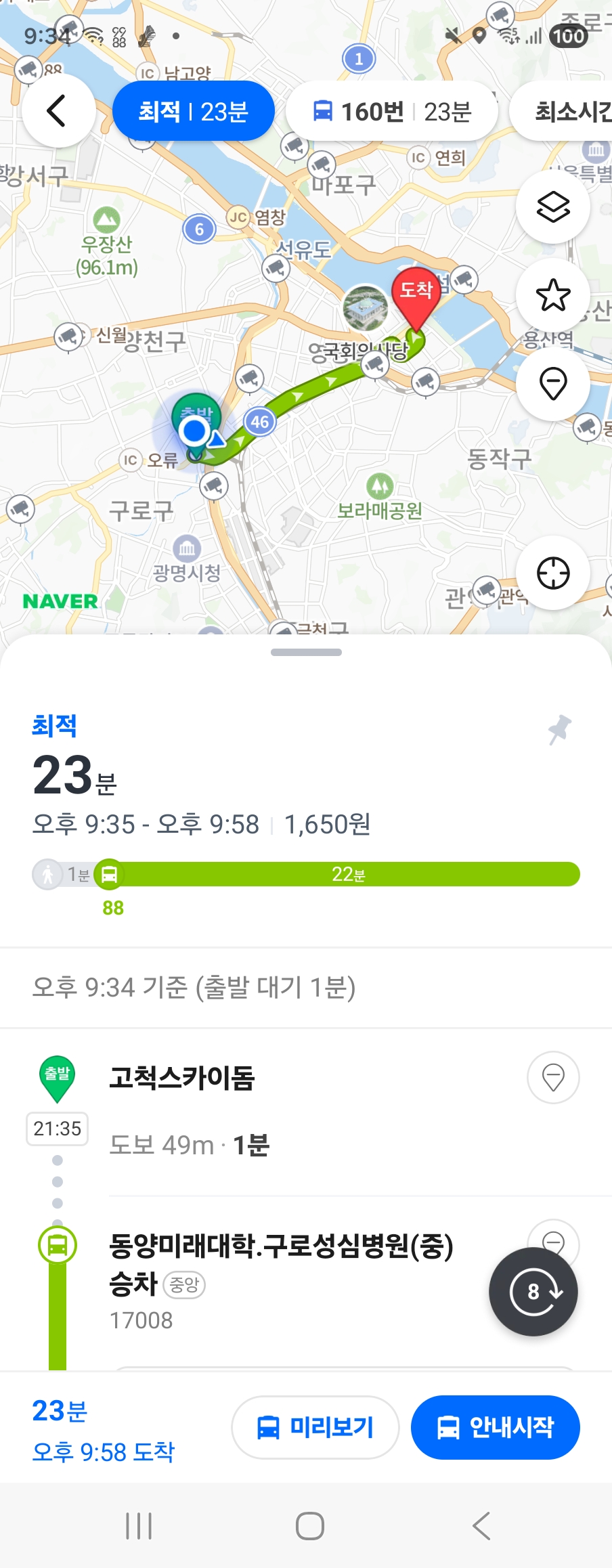
1. Naver Maps (네이버 지도) — Your Primary Tool
Forget Google Maps for finding restaurants in Korea. Naver Maps is what locals use, and the restaurant data is far more accurate and complete. The English version works well.
What makes it useful for budget eating:
- Photos of every dish with prices — tap a restaurant and you'll often see the full menu with photos uploaded by real customers
- Visitor reviews in Korean — use Papago to translate, or just look at the star ratings and photo quality
- Hours and "busy times" — shows live wait times similar to Google
- Filter by price range — you can sort for budget-friendly spots
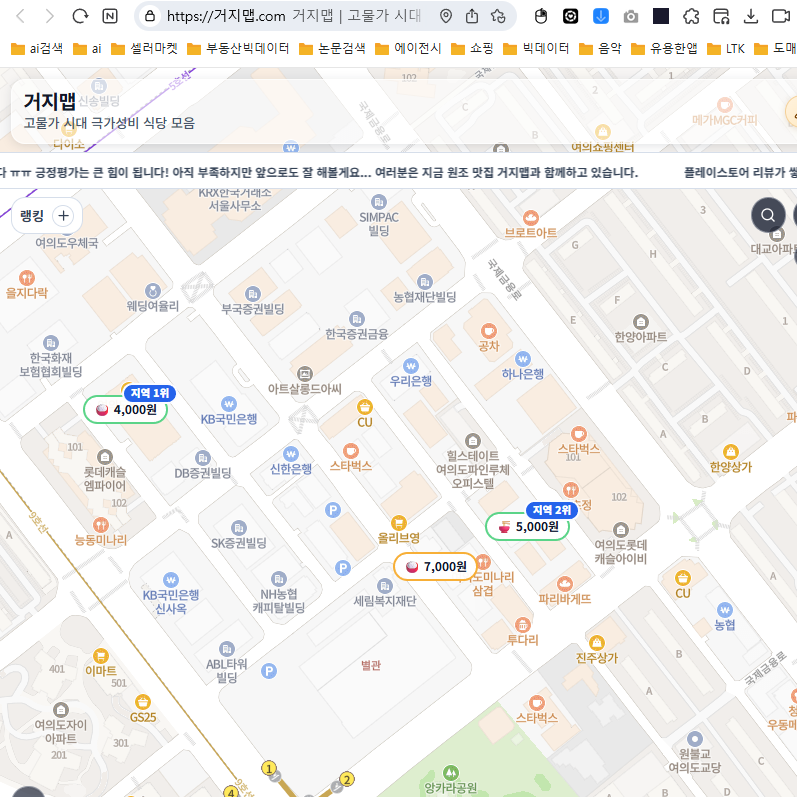
2. 거지맵 (Geoji Map) — The Budget Eater's Secret
"거지" literally means "beggar" in Korean — so Geoji Map is essentially the "cheap food map." It's a community-sourced map of restaurants where you can eat well for under ₩5,000–₩8,000. Locals use it to find affordable set meals and lunch specials near offices and universities.
How to use it as a foreigner: Search "거지맵" on the App Store or Google Play. The interface is in Korean, but the map pins show you locations — tap a pin, get an address, plug it into Naver Maps or Kakao Maps. Use Papago to translate the menu once you arrive.
The categories you'll see most:
- 백반집 (baekban-jip) — home-style set meal restaurants, usually ₩5,000–₩7,000 for rice + soup + 4–5 side dishes
- 김밥천국 style restaurants — gimbap, ramen, bibimbap, all under ₩5,000
- 학식 (university cafeterias) — some are open to the public, meals for ₩3,500–₩5,000
💡 Lunch (12–1pm) is the best value time to eat in Korea. Many restaurants offer a 점심특선 (lunch special) — a full set meal for ₩7,000–₩9,000 that would cost ₩13,000–₩15,000 at dinner.
Convenience Stores — A Real Meal Option
Korean convenience stores (편의점, pyeonuijeom) are not like Western ones. They have seating, microwaves, hot water dispensers, and a rotating selection of fresh food. A full convenience store meal typically costs ₩3,000–₩5,000.
What to get:
- Samgak gimbap (삼각김밥) — triangle rice balls stuffed with tuna, kimchi, or bulgogi. ₩1,000–₩1,500 each. Two of these = a snack or light meal.
- Cup ramen (컵라면) — ₩1,200–₩1,800. Add hot water at the dispenser. Weirdly satisfying at midnight.
- Dosirak (도시락) — convenience store lunch boxes, ₩3,500–₩5,000. Rice + meat + vegetables. Heat in the microwave.
- Kimbap rolls — ₩2,000–₩3,500 for a full roll.
- Fried chicken pieces — GS25 and CU both do fried snacks at the counter, ₩1,000–₩2,000.
The best convenience store chains for food quality: GS25 and CU slightly edge out 7-Eleven for fresh food selection.
Cheap Restaurant Types to Look For
김밥천국 (Gimbap Cheongguk) style restaurants
These small, no-frills restaurants serve Korean comfort food fast and cheap. Look for laminated menus on the wall with photos. Almost everything is under ₩6,000:
- 김밥 (gimbap) — Korean rice rolls, ₩3,000–₩4,000
- 라면 (ramen) — ₩3,500–₩4,500
- 순두부찌개 (soft tofu stew) — ₩6,000–₩7,000
- 볶음밥 (fried rice) — ₩5,000–₩6,000
백반집 (Home-style set meal)
Typically run by older Korean women, these restaurants serve the most authentically Korean food you'll eat. You get rice, soup, and 4–5 banchan (side dishes) that change daily. Total cost: ₩5,000–₩8,000. Look for places with handwritten signs and older clientele — that's the good stuff.
대학교 주변 (University areas)
Every university area in Korea has a cluster of cheap restaurants catering to students. The best in Seoul:
- 신촌 (Sinchon) — near Yonsei and Ewha universities, lots of variety
- 홍대 (Hongdae) — slightly more tourist-oriented but still cheap
- 혜화 (Hyehwa) — near Seoul National University of Education, very local feel
- 안암 (Anam) — near Korea University, authentic and cheap
Street Food — Cheap and Everywhere
Korean street food (분식, bunsik) is everywhere and costs ₩1,000–₩3,000 per item:
- 떡볶이 (tteokbokki) — spicy rice cakes, ₩2,000–₩3,000
- 순대 (sundae) — Korean blood sausage, ₩3,000 for a portion
- 어묵 (eomuk) — fish cake skewers in hot broth, ₩500–₩1,000 each
- 호떡 (hotteok) — sweet pancake filled with brown sugar and nuts, ₩1,000–₩1,500
- 붕어빵 (bungeoppang) — fish-shaped waffle with red bean or custard filling, ₩1,000 for 2–3
Best street food areas: Myeongdong (tourist but good variety), Gwangjang Market (authentic, more local), any traditional market.
What to Actually Budget for Food
Realistic daily food budget in Korea:
- Ultra-budget (convenience store + street food): ₩10,000–₩15,000/day (~$7–$11)
- Budget (local restaurants + one splurge): ₩20,000–₩35,000/day (~$15–$25)
- Mid-range (restaurants + occasional Korean BBQ): ₩40,000–₩70,000/day (~$30–$50)
Korean BBQ (삼겹살, samgyeopsal) looks expensive but is actually reasonable — around ₩15,000–₩20,000 per person including side dishes and rice, and it's an experience worth having at least once.
More Korea Travel Guides
What not to pack, how to get around cheap, budget shopping — all in one place.
Browse Korea Guides →