Korea's public transit is one of the best in the world — cheap, clean, punctual, and easy to navigate even without Korean. A single T-money card gets you on subways, buses, and even some taxis. Here's everything you need to know to get around without spending much.
Step 1: Get a T-Money Card the Moment You Land
The T-money card is Korea's rechargeable transit card. It works on:
- All Seoul Metro subway lines
- City buses in Seoul and most other Korean cities
- Some taxis (look for the T-money sticker)
- Intercity buses
- Even some convenience store purchases
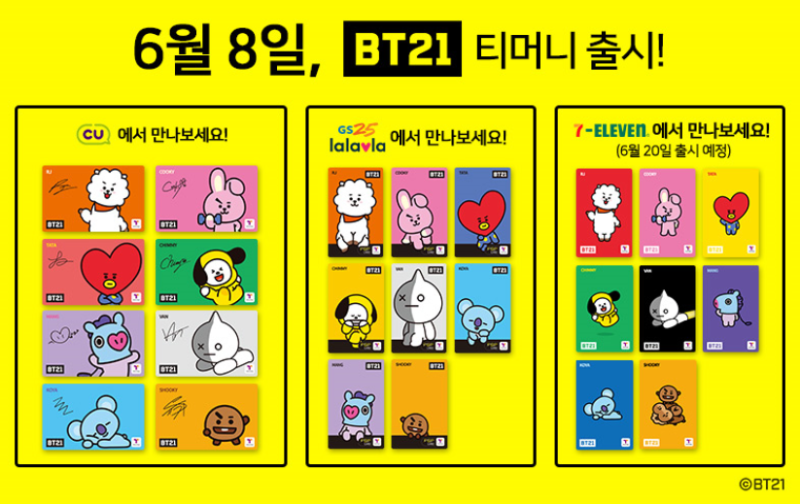
Where to buy: Any convenience store (CU, GS25, 7-Eleven) — including ones inside Incheon Airport arrivals. Cost: ₩2,500–₩4,000 for the card itself. Load it with cash at the convenience store counter or at any subway station machine.
How much to load: ₩30,000–₩50,000 is a good starting amount for a few days in Seoul. You can top it up anywhere, anytime.
The discount: T-money gives you a ₩100 discount per subway/bus ride vs paying cash. More importantly, you get free transfers between subway and bus within 30 minutes — which adds up fast.
💡 At the end of your trip, unused T-money balance can be refunded at convenience stores (up to ₩20,000 at once, small fee applies for over ₩20,000).
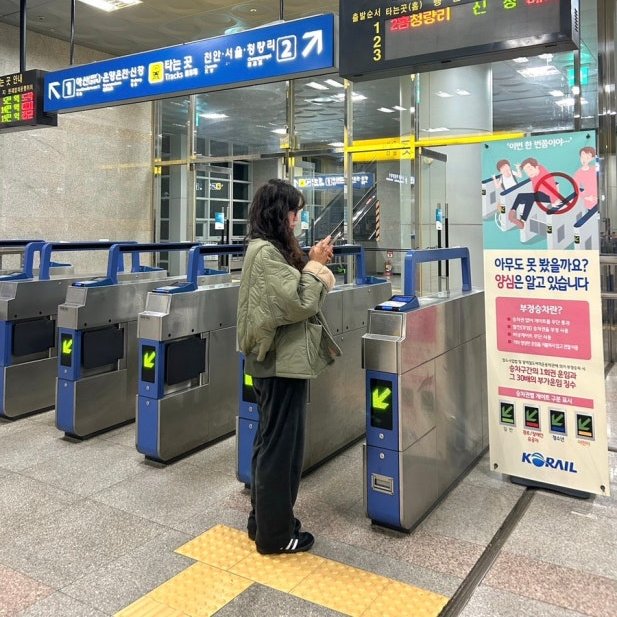
Seoul Subway — Cheapest Way Around the City
The Seoul Metro is enormous — 23 lines covering Seoul and extending deep into the surrounding region. Base fare: ₩1,400 (~$1 USD). Longer trips add ₩100 per 5km over 10km.
What surprises most visitors: the subway reaches way beyond Seoul city limits. You can take the subway to:
- Suwon (Line 1) — ₩1,850, about 1 hour from central Seoul
- Incheon (Lines 1 or Airport Railroad) — ₩1,650–₩2,150
- Gapyeong (ITX-Cheongchun from Cheongnyangni) — ₩4,800, gateway to Nami Island
- Uijeongbu, Goyang, Bucheon — all reachable on the regular metro fare
For navigation: use Naver Maps or Kakao Maps — both show real-time subway routes, transfer points, and exact fares. Google Maps works too but is slightly less accurate for Korean transit timing.
City Buses — Even Cheaper, Once You Know the System
Seoul buses are color-coded by type:
- Blue (간선) — Main arterial routes across the city. Most useful for tourists.
- Green (지선) — Feeder routes connecting to subway stations.
- Red (광역) — Express buses to satellite cities outside Seoul.
- Yellow (순환) — Short circular routes in specific areas.
Base fare: ₩1,300 with T-money. Transfer between bus and subway is free within 30 minutes (and up to 4 transfers).
Seoul → Other Cities: KTX vs Express Bus
This is where you save serious money. The express bus is almost always significantly cheaper than KTX, with only a modest time difference on many routes.
| Route | KTX | Express Bus | Savings |
|---|---|---|---|
| Seoul → Busan | ₩59,800 / 2h 15m | ₩24,200 / 4h 30m | ₩35,600 |
| Seoul → Gyeongju | ₩52,300 / 2h | ₩22,400 / 3h 30m | ₩29,900 |
| Seoul → Daegu | ₩43,500 / 1h 40m | ₩18,400 / 3h | ₩25,100 |
| Seoul → Jeonju | No direct KTX | ₩10,900 / 2h 30m | Best by bus |
Express bus terminal in Seoul: Central City Terminal (센트럴시티, near Express Bus Terminal subway station) and Dong Seoul Terminal (동서울터미널). Both are on the Seoul Metro — easy to reach without a taxi.
Booking express buses: Use the Kobus app or website (kobus.co.kr) — English available. You can book in advance or just show up for the next departure (buses run frequently on popular routes).
When KTX IS Worth It
The express bus is almost always cheaper, but KTX makes sense when:
- You're going to Busan and time matters (2h15m vs 4h30m is a real difference)
- You buy a Korail Pass — unlimited KTX rides for 2/3/5 days, good value if you're city-hopping quickly
- You're traveling during a major holiday (Chuseok, Lunar New Year) when buses sell out days in advance
Taxis — Cheaper Than You Think
Korean taxis are significantly cheaper than taxis in Western countries. A 15-minute city ride typically runs ₩6,000–₩10,000. Use Kakao T to hail a taxi — it works like Uber, shows the fare estimate upfront, and accepts international credit cards. Much easier than flagging down a cab and trying to communicate an address in Korean.
Airport to Seoul City Center
From Incheon Airport, the cheapest option is the Airport Railroad (AREX):
- All-stop train: ₩4,150 to Seoul Station, about 53 minutes. Payable with T-money.
- Express train: ₩9,500 to Seoul Station, 43 minutes. Faster but not a huge time difference.
- Airport limousine bus: ₩10,000–₩16,000 depending on destination. Drops you closer to many hotels than the subway.
Skip the taxi from the airport — it costs ₩70,000–₩90,000 to central Seoul and takes similar or longer time in traffic.
More Korea Travel Guides
Budget eating, cheap shopping, and what to skip packing — all in the Korea Guide section.
Browse Korea Guides →