Korea has some of the fastest mobile data in the world. Getting connected is easy and cheap — you have three main options: physical SIM card, eSIM, or pocket WiFi rental. Here's the honest breakdown of each, including prices and exactly where to get them.
Option 1: Physical SIM Card (Best Value)
A Korean tourist SIM gives you 4G/5G data and sometimes calls/SMS. This is the most cost-effective option for most travelers.
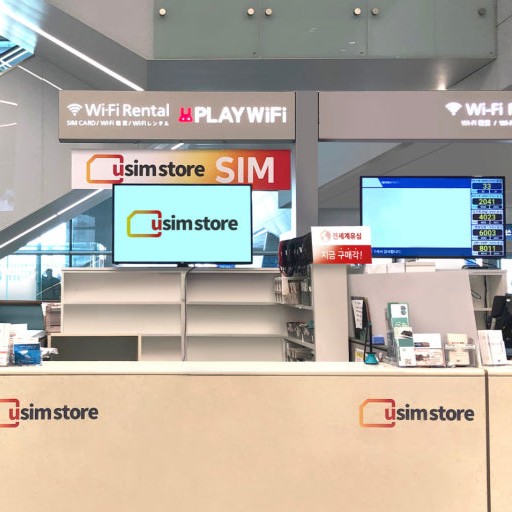
Where to buy at Incheon Airport
The fastest option: pick one up the moment you clear arrivals. At Incheon Airport Terminal 1 and Terminal 2, you'll find booths from all three major Korean carriers:
- KT (kt.com) — largest network, strong coverage nationwide
- SKT (sktelecom.com) — also excellent coverage
- LG U+ — slightly smaller but still very good
All three have English-speaking staff at airport kiosks. The booths are open from around 7am to 10pm. Look for them in the arrivals hall near the exit.
Pricing
- 5 days, unlimited data: ₩25,000–₩30,000
- 10 days, unlimited data: ₩33,000–₩38,000
- 30 days, unlimited data: ₩55,000–₩65,000
Note: "unlimited" often means full-speed for a daily cap (e.g., 3–5GB/day), then throttled. For most travelers, you'll never hit the daily limit.
What you need to buy
- Your passport
- Cash or international credit card
- Know your phone's SIM tray size (most modern phones are nano-SIM)
💡 If you arrive after 10pm when airport kiosks are closed, there are 24-hour convenience stores in the arrivals area — some sell tourist SIM cards. Alternatively, pick one up at any Korean convenience store (CU, GS25) the next morning.
Buying a SIM outside the airport
Tourist SIMs are sold at:
- Convenience stores (CU, GS25, 7-Eleven) — look in the display rack near the counter
- Carrier stores (SKT, KT, LG U+) — in every shopping area, requires passport
- Online (pre-order before you arrive) — KT Roaming, SKT Global
Option 2: eSIM (Most Convenient)
If your phone supports eSIM (most phones from 2019 onwards do), this is the most convenient option — activate it before you board, arrive connected.
How to check if your phone supports eSIM
Go to Settings → General → About → look for "Digital SIM" or "eSIM" information. On Android: Settings → Connections → SIM Manager → Add eSIM.
eSIM providers for Korea
- Airalo — Most popular with budget travelers. Korea data-only plans from ~$8–15 USD for 7–30 days. Purchase and activate in the Airalo app before arrival.
- Holafly — Slightly more expensive but well-reviewed support. Unlimited data plans.
- KT eSIM (direct) — Available at the KT airport kiosk for a Korean carrier eSIM with local pricing.
- Nomad — Good regional plans if you're also visiting Japan or other Asian countries.
eSIM vs physical SIM cost: eSIM is typically 10–20% more expensive than a physical SIM for the same data. You pay for the convenience of not swapping your SIM card.
💡 eSIM limitation: data-only. You won't have a Korean phone number, which matters for apps that require SMS verification with a Korean number. For most tourist apps (Naver Maps, Kakao T, NOL, Kobus), international numbers work fine. Only a few Korean-specific services need a local number.
Option 3: Pocket WiFi (Only for Groups)
A portable WiFi device lets multiple people share one data connection. Rent from the airport kiosk or pre-book online for pickup at Incheon arrivals.
Cost: ₩8,000–₩12,000/day, return the device before departure
Best for: Groups of 3+ where everyone splitting the cost makes it cheaper per person. Battery life is typically 6–8 hours.
Not recommended for solo travelers or pairs — a tourist SIM or eSIM is cheaper and more convenient.
Free WiFi in Korea
Korea has genuinely excellent free WiFi coverage. You can rely on it as a supplement (but not as your primary data source):
- Subway stations — All Seoul Metro stations have free WiFi. Connect to "Korail WiFi" or "Seoul City WiFi" networks.
- Convenience stores — GS25, CU, 7-Eleven all have WiFi. Ask for the password on the receipt or look for a sticker near the counter.
- Cafes — Almost every Korean cafe has WiFi. Passwords are usually on the receipt or written on a board. No time limit at most places.
- Public plazas and tourist areas — "PublicWifi_Free" or city-specific networks in major tourist spots
- Airports, KTX stations, bus terminals — Free and fast
Recommendation by Trip Type
| Traveler Type | Best Option | Why |
|---|---|---|
| Solo, budget focus | Physical SIM (airport) | Cheapest, full speed, no fuss |
| Solo, tech-savvy | eSIM (Airalo) | Activate before landing, no SIM swap |
| Group of 3+ | Pocket WiFi or each person's own SIM | Pocket WiFi cheaper split; own SIM more flexible |
| Multi-country trip | Regional eSIM (Nomad/Airalo) | One plan covers Korea + Japan/Taiwan etc. |
Data Usage Estimate
For a typical Korea travel day using Naver Maps, Papago camera, and occasional photo uploads:
- Light use (navigation + translation): ~300–500 MB/day
- Moderate use (+ social media): ~1–2 GB/day
- Heavy use (video calls, streaming): 3+ GB/day
A 10GB plan is more than enough for most 7–10 day trips at moderate usage.
More Korea Travel Guides
Apps, accommodation, transport, food — everything you need to travel Korea smart.
Browse Korea Guides →